
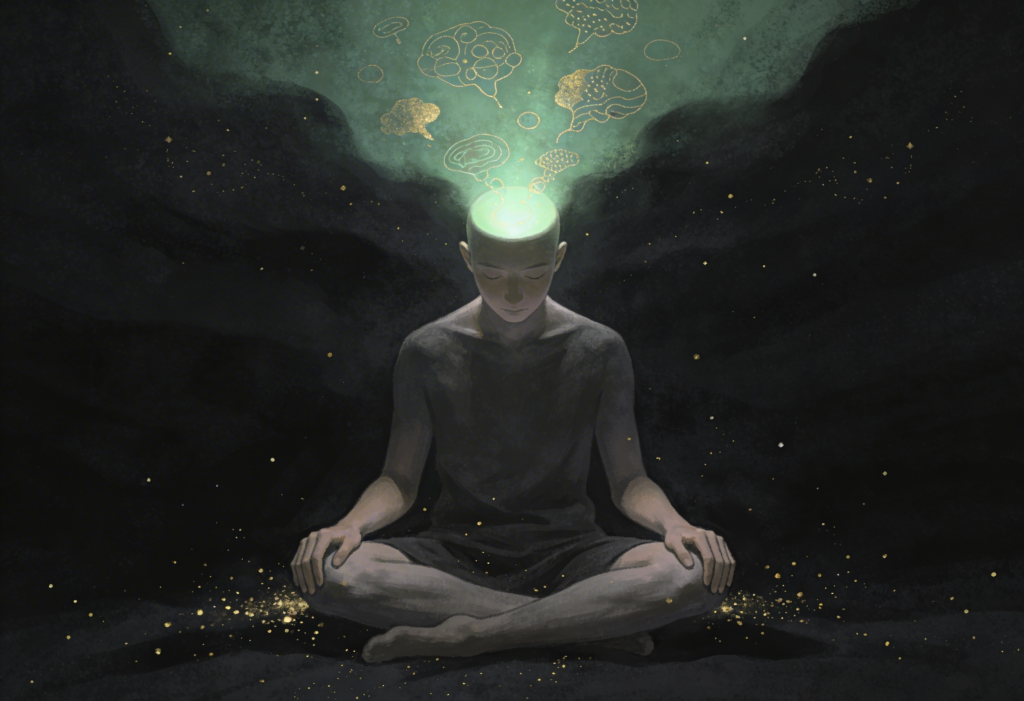
The Re-wiring Lab / Shadow Work Series – Part 1
The Parts You’ve Been Taught to Hate
There’s a part of you that you’ve spent your entire life trying to hide. Not from others—from yourself.
It’s the anger you were told was “unspiritual.” The ambition you learned was “selfish.” The sexuality you were taught was “shameful.” The neediness you were convinced was “weak.” The rage, the greed, the jealousy, the pride—all the qualities you decided were unacceptable, dangerous, or proof of your unworthiness.
You didn’t consciously choose to exile these parts. It happened automatically, starting in childhood. Your parents’ disapproval. Your teachers’ correction. Your peers’ mockery. Your religion’s condemnation. Society’s judgment. Each time you expressed something deemed “bad,” you received a message: This part of you is not okay. Hide it. Suppress it. Deny it exists.
So you did. You pushed it down into what Carl Jung called “the shadow”—the unconscious repository of everything you’ve rejected about yourself.
But here’s what no one told you: Those exiled parts didn’t disappear. They went underground, where they’ve been running your life from the darkness. The anger you suppressed leaks out as passive aggression. The ambition you denied becomes compulsive overwork. The sexuality you rejected manifests as shame or compulsion. The neediness you hide creates anxious attachment. Every quality you disowned is still operating—just unconsciously, which makes it far more dangerous.
And here’s the paradox that changes everything: The shadow isn’t just a garbage dump for “bad” qualities. It’s a treasure chest of disowned power, creativity, and vitality. The very qualities you’ve spent your life suppressing are the ones you most need to reclaim.
The Watcher Meets the Shadow: Why Observation Is the Only Way Out
Most people try to fix their shadow through willpower. They try to think their way out of patterns. They try to force themselves to be “better.” This fails for a simple reason: You cannot change what you cannot see. You cannot heal what you won’t acknowledge.
This is where The Watcher—metacognitive awareness—becomes your most powerful tool for shadow work. The Watcher is the part of you that can observe thoughts, emotions, and patterns without being consumed by them. It’s the awareness that stands back and notices: “There’s that rage again. There’s that shame. There’s that pattern.”
The Neuroscience of Shadow and Observation
Dr. Matthew Lieberman’s research at UCLA on neural self-deception reveals something crucial: suppressed emotions don’t vanish—they remain active in subcortical regions while being blocked from conscious awareness. His fMRI studies demonstrate that emotional suppression actually increases amygdala activation while decreasing prefrontal control. You think you’re managing the emotion; you’re actually losing control of it.
But here’s where The Watcher changes the game: When you simply observe a suppressed emotion or shadow quality without judgment, something remarkable happens in the brain. The act of metacognitive observation activates the medial prefrontal cortex—the region that allows you to witness your own mental states. This creates what neuroscientists call “affect labeling”—the simple act of naming what you’re experiencing.
Dr. Dan Siegel’s research shows that when you name an emotion, you literally tame it. Brain scans reveal that labeling feelings reduces amygdala reactivity while increasing prefrontal regulation. The Watcher observes. The brain reorganizes. The shadow loses its unconscious grip.
What the Ancients Knew
Every contemplative tradition discovered this independently:
The Sufis practiced muraqaba (self-observation), teaching that only by witnessing your nafs (ego-self) without judgment could you see what lived in your heart’s darkness. Rumi wrote: “Don’t turn your head. Keep looking at the bandaged place. That’s where the light enters you.”
The Stoics called it prosoche (attention). Marcus Aurelius taught: “The impediment to action advances action. What stands in the way becomes the way.” Your shadow—properly observed—becomes your path to freedom.
The Buddhists developed vipassana (insight meditation), training practitioners to watch all mental phenomena—including the most disturbing thoughts and emotions—with equanimity. The Buddha taught: “All that we are arises with our thoughts. With our thoughts we make the world.” But first, you must see those thoughts clearly.
These weren’t philosophical concepts. They were precise technologies for shadow integration through observation. The Watcher is ancient wisdom meeting modern neuroscience.
The Two Types of Shadow: Dark and Golden
Most shadow work focuses on the dark shadow—the “negative” qualities we’ve rejected. But there’s also a golden shadow—the positive qualities we’ve disowned. Both require The Watcher’s observation. Both require integration.
The Dark Shadow: Your Rejected “Negative” Qualities
These are the qualities you consider unacceptable in yourself:
Anger and Aggression: If you were taught that anger was dangerous or “unspiritual,” you exiled this energy. Now it operates unconsciously—passive aggression, chronic resentment, sudden explosions. The Watcher notices: “There’s the suppressed anger appearing as sarcasm again.”
Neediness and Vulnerability: If your family required you to be “strong” or “independent,” you buried your need for connection. Now it appears as anxious attachment, people-pleasing, or compulsive self-sufficiency. The Watcher observes: “That’s the hidden need driving this behavior.”
Selfishness and Boundaries: If you learned that your needs didn’t matter, you exiled healthy self-interest. Now you can’t say no, can’t set boundaries, can’t advocate for yourself. The Watcher sees: “I’ve made selflessness into self-abandonment.”
Sexuality and Desire: If your body was shameful or your desires were wrong, you suppressed this vitality. Now it emerges as compulsion, shame, or complete disconnection from your body. The Watcher notes: “This shame is just an old message, not truth.”
The Golden Shadow: Your Rejected Positive Qualities
But the shadow contains more than just suppressed “negative” qualities. It also holds your exiled gold—the positive qualities you were taught were too much:
Your Brilliance: Perhaps your intelligence threatened others. Your insight made adults uncomfortable. Your wisdom was dismissed. So you learned to dim your light. The Watcher recognizes: “I’ve been hiding my gifts to feel safe.”
Your Power: Maybe your strength intimidated people. Your leadership seemed arrogant. Your confidence appeared threatening. So you learned to stay small. The Watcher observes: “I’m playing small because standing tall felt dangerous.”
Your Beauty: Your attractiveness might have brought unwanted attention. Your radiance was called vanity. Your self-love seemed narcissistic. So you learned to hide. The Watcher sees: “I’ve made invisibility a survival strategy.”
Your Joy: Perhaps your happiness felt inappropriate in a depressed family. Your aliveness seemed like a betrayal of others’ suffering. Your excitement was “too much.” So you learned to mute your life force. The Watcher notices: “I’m holding back my aliveness to match others’ deadness.”
As Marianne Williamson wrote: “Our deepest fear is not that we are inadequate. Our deepest fear is that we are powerful beyond measure. It is our light, not our darkness, that most frightens us.”
The Neural Architecture of Shadow Formation
Understanding how the shadow forms helps The Watcher recognize its patterns:
Stage 1: Original Wholeness (Birth to ~Age 2)
You arrive with the full spectrum of human qualities—aggression and tenderness, selfishness and generosity, sexuality and innocence, power and vulnerability. You’re a complete, undivided being. Dr. Daniel Stern’s research on infant development shows that babies display the entire range of human emotions and impulses without self-consciousness or shame. There’s no split yet between “good me” and “bad me.”
Stage 2: Conditional Love and the Split (~Age 2-7)
You discover that certain behaviors earn love, safety, and approval while others bring rejection, punishment, or abandonment. Your survival depends on getting this right. So your developing brain begins the great sorting:
- This part of me is acceptable (ego/persona)
- This part must be hidden (shadow)
The split isn’t conscious—it’s a survival strategy encoded in neural pathways.
Dr. D.W. Winnicott called the acceptable version the “false self”—a compliant persona constructed to maintain attachment bonds. His research showed that children develop false selves in response to parents’ inability to mirror their authentic experience. The true self—containing all the “unacceptable” qualities—goes into hiding.
The neuroscience: Your developing prefrontal cortex learns to suppress amygdala responses (emotions) that threaten attachment. Neural pathways form: “Anger = parental withdrawal = survival threat = must suppress.” These pathways become automatic, operating below conscious awareness.
Stage 3: Projection and Repetition (Ongoing)
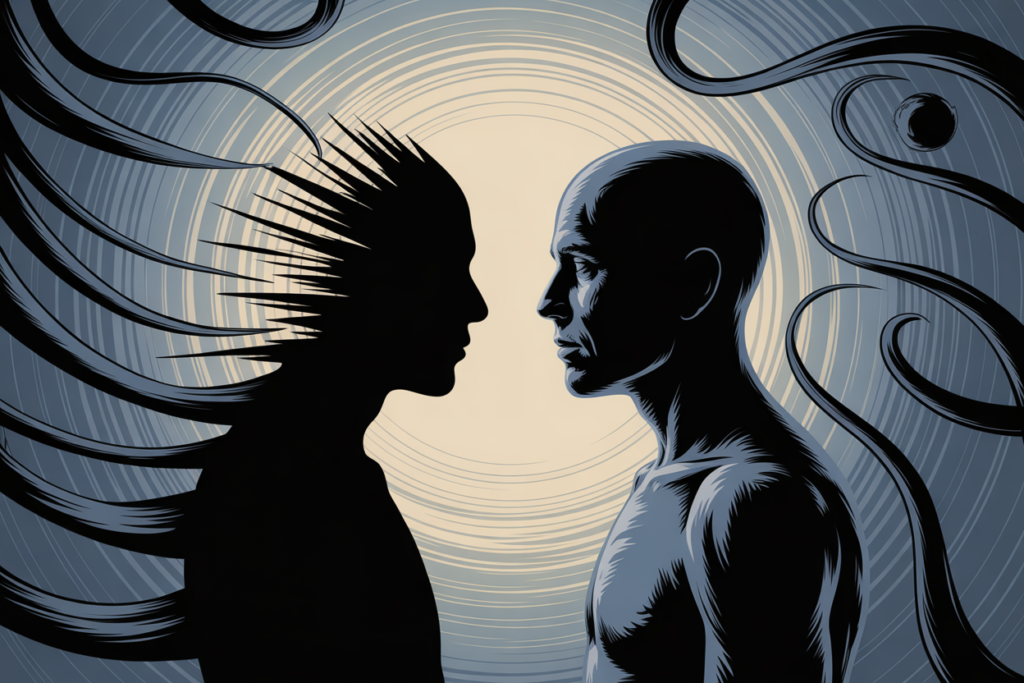
Once qualities are exiled to the shadow, you can no longer see them in yourself. But you see them everywhere in others. This is projection—attributing your disowned qualities to other people.
The person who unconsciously rejects their own anger becomes hypersensitive to others’ aggression. The person who denies their sexuality becomes judgmental of others’ sexual expression. The person who hides their ambition resents others’ success. What you can’t own in yourself, you attack in others.
Dr. Peter Fonagy’s research on mentalization demonstrates that the capacity to understand your own mental states directly predicts your ability to understand others. When you can’t recognize your own anger, you misinterpret others’ anger. When you deny your own neediness, you can’t accurately perceive others’ needs. Shadow work is mentalization work—developing accurate self-awareness that allows accurate other-awareness.
The Watcher observes this mechanism: “I’m triggered by their arrogance. What arrogance have I exiled in myself? I’m judgmental of their neediness. Where am I denying my own needs?”
The 60-Day Watcher Shadow Integration Protocol
This isn’t theory. This is laboratory work. You are the scientist. The Watcher is your instrument. The shadow is your subject. Neural change is your result.
Weeks 1-2: Shadow Recognition Through The Watcher
Daily Practice (10 minutes):
- Sit in Watcher consciousness: Place hand on heart. Three breaths. Activate your observing awareness.
- Trigger Inventory: The Watcher notices: “What triggered strong emotion today? Who irritated me? What behavior in others disgusted me? What quality did I judge?”
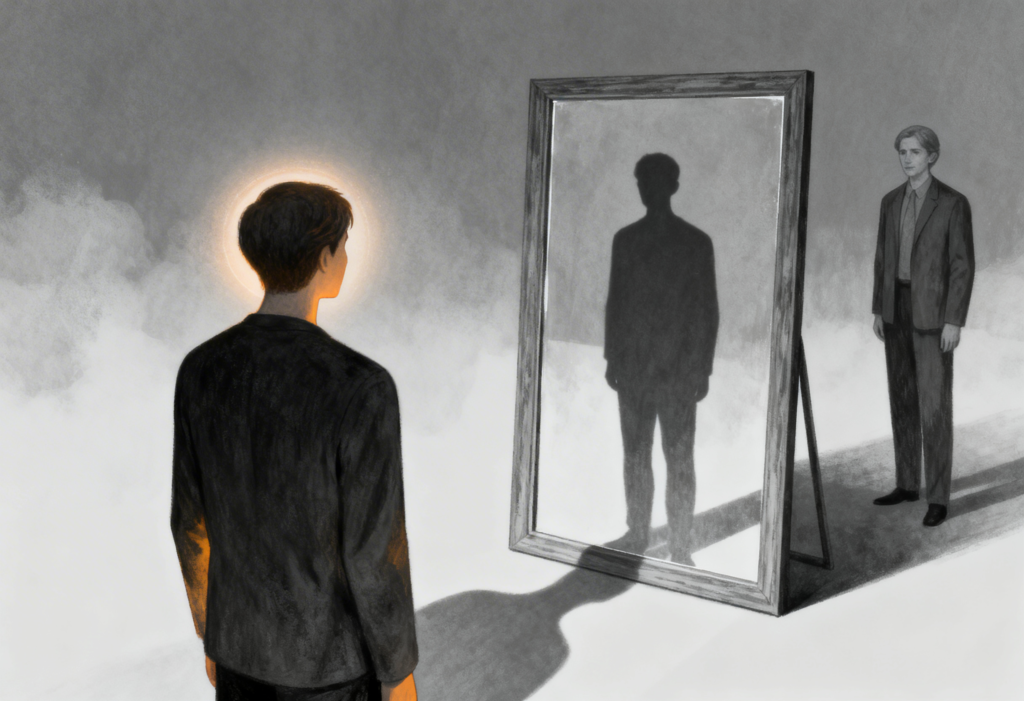
- The Mirror Question: For each trigger, ask: “Is this quality also in me—hidden in my shadow? Have I rejected this in myself?” The Watcher observes without judgment.
- Shadow Journal: Write what The Watcher notices. No fixing. No shame. Pure observation.
Neuroscience: You’re training the medial prefrontal cortex to observe shadow patterns without defensive suppression. Each observation weakens the automatic suppression pathway.
Weeks 3-4: Meeting Your Dark Shadow
Daily Practice (15 minutes):
- Watcher Position: Establish observing awareness. “I am not my shadow. I am the one watching it.”
- Name the Exiled Quality: Choose one dark shadow quality (anger, neediness, selfishness, etc.). The Watcher asks: “When did I learn this was unacceptable? What early message exiled this part?”
- Childhood Dialogue: Imagine your child self. The Watcher witnesses the moment this quality was rejected. What happened? Who rejected it? What did you decide?
- Compassionate Observation: The Watcher notices: “This part wasn’t evil. It was threatening to my survival. My child-self made the best decision available.” No judgment. Pure understanding.
- Document: Journal what The Watcher observed.
Neuroscience: You’re creating new neural pathways that link the shadow quality to understanding rather than shame. The hippocampus (memory) reconnects with the prefrontal cortex (understanding), weakening amygdala reactivity.
Weeks 5-6: Reclaiming Your Golden Shadow
Daily Practice (15 minutes):
- Watcher Awareness: Establish observing consciousness.
- Name the Hidden Gold: Choose one golden shadow quality (brilliance, power, beauty, joy, etc.). The Watcher asks: “When did I learn this was dangerous? Why did I hide this light?”
- Safe Expression Experiment: The Watcher guides a small, safe expression of this quality:
- If it’s brilliance—share one insight you usually hide
- If it’s power—make one decision without seeking consensus
- If it’s beauty—accept one compliment without deflecting
- If it’s joy—laugh fully, dance alone, celebrate a win
- Notice Resistance: The Watcher observes: “What fears arise when I express this? What old messages play?” Journal without judgment.
- Document: Record what The Watcher noticed.
Neuroscience: You’re creating new associations. Previously, brilliance/power/beauty triggered threat responses. Now The Watcher creates space between the quality and the fear, allowing new pathways to form.
Weeks 7-8: Conscious Integration Through The Watcher
Daily Practice (20 minutes):
- Watcher Position: Establish strong observing awareness.
- Dark Shadow Practice: The Watcher guides conscious, appropriate expression of dark shadow qualities:
- Healthy Anger: “I don’t like this. This doesn’t work for me.” (The Watcher observes: Can I express anger without destruction?)
- Healthy Need: “I could use support with this.” (The Watcher notices: Can I express needs without shame?)
- Healthy Selfishness: “I’m choosing what’s best for me here.” (The Watcher watches: Can I prioritize myself without guilt?)
- Golden Shadow Practice: The Watcher supports stepping into your exiled positive qualities:
- Claiming Power: Lead a meeting, make a decision without consensus (The Watcher observes: What happens when I own my authority?)
- Owning Beauty: Accept compliments, post a photo you like (The Watcher notices: Can I be visible without apology?)
- Expressing Joy: Celebrate success publicly, share excitement (The Watcher watches: Can I feel joy without shrinking?)
- Reality Check: The Watcher asks after each practice: “Did the catastrophe happen? How did people actually respond? How do I feel now?”
- Integration Journal: Document what The Watcher observed about integration.
Neuroscience: You’re strengthening new neural pathways through repeated activation. Hebbian learning: neurons that fire together (shadow quality + safety) wire together. The Watcher ensures you stay conscious during this rewiring.
Shadow Work in Relationships: The Watcher as Mirror
Intimate relationships are shadow workshops. Your partner will inevitably trigger your shadow—that’s not a bug, it’s a feature. Psychotherapist Harville Hendrix’s research on Imago Relationship Therapy shows that we unconsciously choose partners who carry our disowned qualities. The person who rejected their anger partners with someone rageful. The person who denied neediness partners with someone clingy.
This isn’t masochism—it’s the psyche’s attempt to heal through relationship. Your partner’s “difficult” qualities are invitations to reclaim what you’ve rejected in yourself.
The Watcher’s 90/10 Relationship Rule
When your partner triggers intense emotion, The Watcher observes this truth: They’re 10% responsible (they did something) and you’re 90% responsible (your shadow is activated).
The Practice:
- Notice the Trigger: The Watcher catches the intense reaction. “This feels bigger than the situation.”
- The Mirror Question: Before reacting, The Watcher asks: “My partner is showing me something I can’t see in myself. What part of me is being reflected here?”
- Shadow Investigation: The Watcher explores:
- If their anger triggers me → Where have I exiled my own anger?
- If their neediness irritates me → Where have I rejected my own needs?
- If their selfishness enrages me → Where do I deny my own healthy selfishness?
- Conscious Response: After The Watcher’s investigation, you can still address the 10% (their actual behavior) from a grounded place. But you’ve transformed 90% of your suffering through shadow awareness.
As Rumi taught: “The wound is the place where the Light enters you.” The Watcher helps you find that light.
The Neuroplasticity of Shadow Integration
Contemporary research by Dr. Paul Gilbert on “common humanity” (recognizing that suffering and imperfection are universal) shows that those who accept their flaws demonstrate more compassion for others. His studies reveal that self-acceptance predicts other-acceptance—you can only love others to the degree you’ve learned to love your own shadow.
Dr. James Pennebaker’s groundbreaking research on expressive writing reveals that actively inhibiting thoughts and feelings creates work for the body—increasing blood pressure, disrupting immune function, and predicting physical illness. His studies show that confronting previously inhibited experiences (shadow work) reduces physician visits, improves immune markers, and enhances psychological wellbeing. Shadow work isn’t just psychological—it’s physiological.
When you bring The Watcher to shadow work, you’re creating measurable brain changes:
- Decreased amygdala reactivity to previously triggering shadow qualities
- Increased prefrontal regulation of emotional responses
- Stronger integration between limbic system (emotions) and cortex (understanding)
- New neural pathways linking shadow qualities to safety rather than threat
This is why the protocol works. You’re not just thinking about your shadow. You’re rewiring the neural architecture that keeps it hidden.
The Liberation: Why Shadow Work Is Freedom
After sustained shadow work with The Watcher, something remarkable happens. You stop trying to be “good.” Not because you become “bad,” but because you transcend the split entirely.
The Watcher observes: I contain everything. Light and dark. Generosity and selfishness. Power and vulnerability. Wisdom and foolishness. Sainthood and monstrosity. All of it.
This isn’t moral relativism—you still have values and boundaries. But you’re no longer in denial about your capacity for the full human range. You’re dangerous because you know you’re dangerous. You’re trustworthy because you’ve met your untrustworthiness. You’re loving because you’ve integrated your hatred.
Paradoxically, owning your darkness makes you lighter. The energy you spent maintaining the split becomes available for creativity, connection, and authentic living. You stop projecting, so relationships become clearer. You stop judging others because you’ve accepted yourself. You become more compassionate precisely because you’ve faced your own shadow.
Jung understood this: “I’d rather be whole than good.”
Shadow work isn’t about becoming enlightened or transcending your humanity. It’s about becoming human—fully, authentically, unapologetically. It’s about retrieving the gold that’s been buried in your darkness and discovering that the very qualities you feared held the power you’ve been seeking all along.
What The Watcher Knows
The Watcher observes this truth: The shadow isn’t your enemy. It’s your buried treasure. And the journey of reclaiming it is the most important work you’ll ever do.
Every quality you’ve rejected—whether dark or golden—is still yours. It always was. The suppression never worked. It only created suffering.
But now you have The Watcher. Now you can observe without being consumed. Now you can name without shame. Now you can integrate without destruction.
This is the path. This is the practice. This is how freedom comes.
Not through perfection. Not through elimination. Through integration. Through observation. Through the courage to see what you’ve spent a lifetime hiding.
The Watcher is ready. Your shadow is waiting. The gold is there, buried in the darkness you’ve been afraid to face.
All that’s required is the willingness to look.
Continue the Work
This is Part 1 of The Grey Hour Shadow Work Series.
Part 2 explores the Inner Saboteur—the protective part that destroys what you most desire. The combined practices from both posts create a complete shadow integration system.
For the complete Watcher Shadow Integration Protocol, including daily practices, troubleshooting, and advanced techniques, visit The Rewiring Lab where ancient wisdom meets modern neuroscience in systematic protocols for breaking patterns.
Follow @owl.daze for daily Watcher wisdom.
I read this article twice, Nizar. Not because I didn’t understand it the first time but because I felt understood by it. And when something understands you at that depth, you don’t scroll past it, you sit with it and reflect.
I love that you didn’t just explain the shadow, you dignified it. You didn’t moralize it or dramatize it, you gave it context. And in doing so, you give the reader back parts of what we have been quietly at war with for years. Your distinction between the dark shadow and the golden shadow hit me in a very personal way. For years, my dark shadow ran my relationships. I buried my needs, I muted my boundaries, I stayed with a partner who carried the parts I disowned for 20 years.
It took years of trial and error and honest pain, to see that what I was attracted to was not love, but projection. My unconscious was trying to reclaim itself through other people. And then I met my Watcher, as a conscious practice through meditation. The Watcher was the first part of me that didn’t panic. When I was in what I now recognize as a dead relationship, the Watcher slowly revealed the pattern, I was shrinking to be chosen, I was over-functioning to feel secure, I was calling self-abandonment patience.
And instead of shaming me, she just observed with care and kindness and that changed everything overtime. Because once I could see the pattern without collapsing into it, it lost its unconscious grip. And then came the golden shadow. I had hidden my qualities to not intimidate, hidden my strength to not seem too much, hidden my joy to not outshine.
Now the Watcher is helping me remember who I was before the split. I’m not rushing into connections, I’m not clinging, I’m not escaping solitude, I am enjoying it. I’m moving forward with awareness, I am honest, patient, intentional.
Nizar, what I appreciate about your work is that it bridges the ancient and the neurological without losing its humanity, bridging soul and science in a very grounding way. You don’t weaponize neuroscience, you use it to restore dignity to what people have been shamed for. This isn’t just intellectual shadow work. It’s relational, embodied, it changes how we connect, choose partners and how we set boundaries. How we stop blaming others for the parts of ourselves we haven’t met yet.
I truly hope you consider putting this work into a book, something we can hold, annotate, underline, return to when we need reminding. Some of us don’t just want to read this on a screen. We want to revisit it during hard seasons. We want to hand it to friends who are stuck in patterns. We want to keep it close.
Your work is outstanding, Nizar, it creates self-honesty without humiliation. Congratulations!
With deep respect and gratitude,
Sofia
Thank you Sofia,
I’ve read your words several times now, and each time I’m moved by the depth of what you’ve shared. This isn’t just a comment; it’s a testament to the courage it takes to face what we’ve been quietly at war with for years, to recognize projection as the unconscious trying to reclaim itself through others, to see patterns without collapsing into them.
Your recognition of the golden shadow—and that The Watcher is now helping you remember who you were before the split: this is integration in its truest form. You’re no longer rushing, clinging, or escaping solitude but enjoying it, moving forward with awareness, honesty, patience, intention.
Thank you for saying this work dignifies rather than moralizes the shadow, that it uses neuroscience to restore dignity rather than weaponize it. That means everything to me. And thank you for the encouragement about a book—your words about wanting something to hold, annotate, return to during hard seasons, to hand to friends stuck in patterns—this touches me deeply and plants seeds I’ll carry forward.
What you’ve offered here isn’t just gratitude; it’s proof that this work matters because people like you are living it with such honesty and courage. Your presence in this community, the wisdom you bring from lived experience, the way you illuminate the path for others—this shapes the work as profoundly as the work shapes you.
With deep respect and gratitude back to you,
-Nizar