
By Nizar Al Haddad | The Grey Hour
Ancient Wisdom for Modern Peace
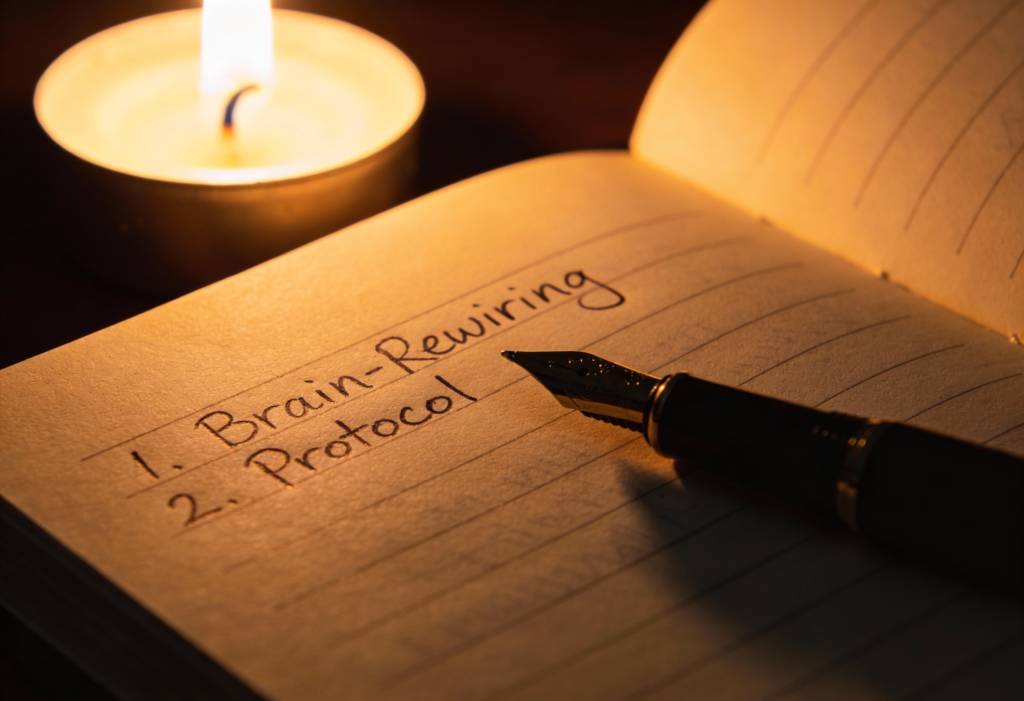
Brain Rewiring Techniques
It’s 3 AM.
You’re awake again—not because of your alarm, but because of that tightness in your chest. The one that shows up when your mind begins its familiar loop: replaying conversations you wish you’d handled differently, rehearsing arguments that haven’t happened yet, reviewing every small failure like evidence in a case you’re building against yourself.
You’ve tried to stop. You’ve read the books. Set the intentions. Made the vision boards. Downloaded the apps. Repeated the affirmations in your mirror until the words felt hollow.
And still, here you are. Same patterns. Same reactions. Same version of yourself you swore you’d outgrow.
The motivation gurus told you it was simple: Just decide to change. Just choose differently. Just think positive.
They were wrong.
Not because change is impossible—but because they fundamentally misunderstood how your brain actually rewires itself.
The Lie We’ve Been Sold About Change
Somewhere along the way, the self-help industrial complex convinced us that transformation works like flipping a light switch. That one moment of clarity, one powerful decision, one burst of willpower should be enough to override decades of conditioning.
Just want it badly enough.
Just believe in yourself.
Just manifest your best life.
This isn’t wisdom. It’s gaslighting.
Because when you inevitably slip back into old patterns—when you people-please despite promising yourself you wouldn’t, when you procrastinate despite knowing better, when you reach for your phone in the middle of a conversation despite hating that you do—the message becomes clear: You’re not trying hard enough. You’re not committed enough. You’re not enough.
The truth is simpler, and kinder:
Your brain wasn’t designed to change through sheer force of will. It changes through specific, repeated, strategic practice that rewires neural pathways over time.
The ancient contemplative traditions knew this. Modern neuroscience has now confirmed it. But the motivation industry conveniently left it out—because “do these specific practices daily for three weeks” doesn’t sell as many seminars as “transform your life in one weekend.”
What Actually Happens When Your Brain Rewires
Let me tell you what’s really happening at 3 AM when you’re caught in that familiar thought loop.
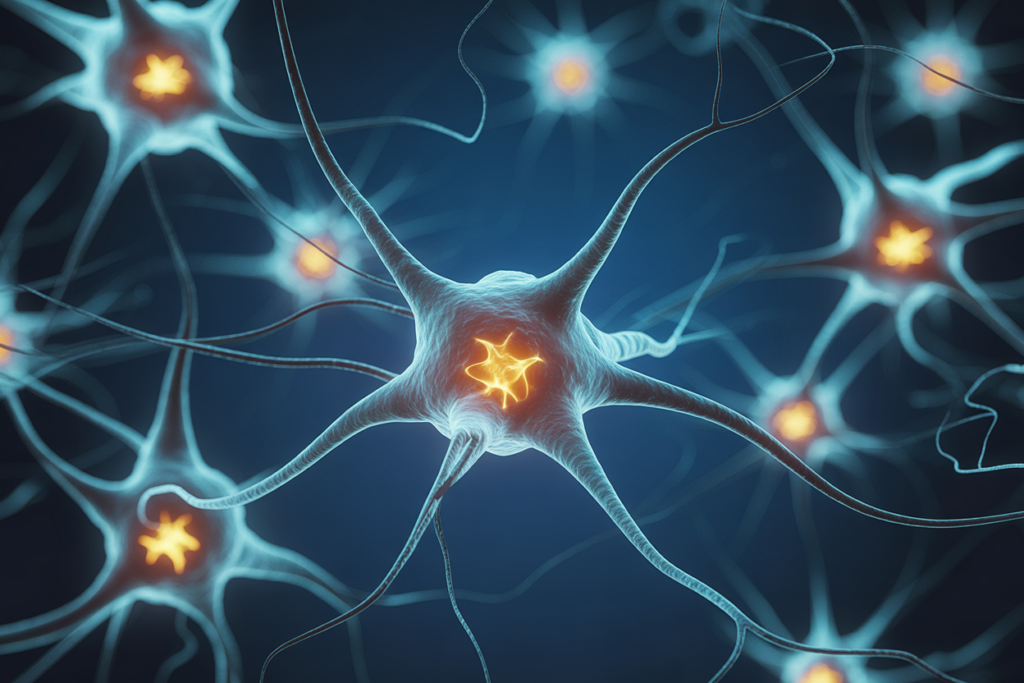
Your brain is running on autopilot. Neural pathways that have been strengthened through years—sometimes decades—of repetition are firing automatically. These pathways are so well-worn that your brain can run them while you’re barely conscious. They’re efficient. They’re fast. And they feel like you.
This is neuroplasticity’s darker side: your brain becomes exceptionally good at what you practice most, whether you want it to or not.
Every time you:
- Catastrophize about a small mistake
- Check your phone to avoid discomfort
- Say yes when you mean no
- Replay past conversations hunting for what you did wrong
…you’re strengthening that neural pathway. You’re making it easier for your brain to do it again tomorrow. Neuroscientists call this “neurons that fire together, wire together.”
Here’s what the motivation gurus missed: You can’t simply decide to stop using a well-worn pathway. Your brain will default to it, especially under stress, because it’s the path of least resistance.
You have to build a new pathway and practice using it so consistently that it becomes stronger than the old one.
This doesn’t happen through positive thinking. It happens through what neuroscientists call self-directed neuroplasticity—the deliberate, systematic practice of new patterns until they become automatic.
Ancient wisdom traditions have been teaching this process for millennia. They just called it something different: practice.
The Three Neuroplasticity Principles Hidden in Ancient Wisdom
When the Stoics talked about askesis (disciplined practice), when Sufis described muraqaba (self-observation), when Buddhists taught bhavana (mental cultivation)—they weren’t being poetic. They were describing precise neuroplastic protocols for rewiring the human mind.
Modern science is only now catching up to what these traditions intuited centuries ago.
Principle 1: Awareness Before Action (The Watcher)
Marcus Aurelius wrote: “You have power over your mind—not outside events. Realize this, and you will find strength.”
He wasn’t promoting toxic positivity. He was teaching neuroplasticity.
Before you can change a pattern, you must see it. Not judge it, not shame yourself for it—see it. Watch it arise. Notice the trigger, the thought, the feeling, the impulse to react.
This is what neuroscientists call metacognition: the ability to observe your own mental processes. And here’s what recent studies have confirmed: the simple act of observing a thought pattern without immediately reacting to it begins to weaken its automaticity.
You’re creating what researcher Judson Brewer calls a “disenchantment” with the old pattern. You’re no longer blindly following it; you’re watching it happen. This disrupts the automatic loop.
The Sufis had a practice for this: muraqaba, or “the watcher.” You observe your thoughts and feelings as they arise without identifying with them. You become the sky watching clouds pass, not the clouds themselves.
This isn’t passive. Watching is the first act of rewiring.
Principle 2: Acceptance Creates Space (The Surrender)
Rumi wrote: *”The Guest House”—his famous poem about welcoming every emotion that arrives at your door, even the difficult ones.
This sounds like spiritual bypassing until you understand the neuroscience: Resistance to an unwanted thought or feeling actually strengthens it.
When you think “I shouldn’t be anxious,” your brain now has two problems to process: the anxiety and your resistance to it. This creates what psychologists call a “secondary suffering loop.” You’re not just anxious; you’re anxious about being anxious.
But when you practice acceptance—“This is what’s arising right now, and I don’t have to fight it”—you activate your parasympathetic nervous system. You signal to your brain that there’s no emergency. The pattern loses its grip.
Buddhist psychology calls this radical acceptance. Cognitive science calls it defusion. Both are describing the same neuroplastic process: creating space between stimulus and response.
Viktor Frankl, who survived the Nazi concentration camps, said it perfectly: “Between stimulus and response there is a space. In that space is our power to choose our response. In our response lies our growth and our freedom.”
That space is created through acceptance, not resistance.
Principle 3: Repetition Rewires (The Practice)
The Buddha didn’t tell his students to meditate once and expect enlightenment. He gave them daily practices—specific techniques to repeat until they became second nature.
The Stoics didn’t read philosophy once. They practiced daily journaling, contemplation, and philosophical exercises—what Pierre Hadot called “spiritual exercises.”
They understood what neuroscientist Donald Hebb later formalized: neurons that fire together, wire together. And the inverse is equally true: neurons that fire apart, wire apart.
This is where most modern self-help fails. It gives you insight without practice. Awareness without repetition. A moment of clarity without a method to make it permanent.
Real neuroplastic change requires:
- Consistency: Daily practice, not occasional bursts
- Duration: At least 14-21 days to begin forming new pathways (research shows habit formation averages 66 days)
- Attention: Focused, deliberate practice—not passive repetition
The ancient traditions knew this intuitively. A monk doesn’t meditate once. A Stoic doesn’t practice premeditatio malorum (contemplation of adversity) once. They do it daily, for years, until the practice becomes who they are.
This is how your brain actually changes: through strategic, repeated practice that gradually makes the new pathway stronger than the old one.
Why This Matters at 3 AM
So let’s return to where we started: you, awake at 3 AM, caught in a familiar pattern.
Now you understand what’s really happening. Your brain is running an old program—one that’s been reinforced through years of repetition. No amount of positive thinking will override it in this moment.
But here’s what will work:
You practice the Watcher. You notice: “Ah, there’s the catastrophizing pattern again. It’s firing because I’m tired and vulnerable. This is what my brain does.” You’re not the pattern. You’re observing it.
You practice the Surrender. You accept: “This thought pattern is here right now, and I don’t have to fight it or believe it. It’s just neurons firing.” You create space.
You practice the Alternative. Instead of following the catastrophizing loop, you deliberately engage a different pathway. Maybe it’s breath work. Maybe it’s a cognitive reframe. Maybe it’s getting up and doing something physical. The specific practice matters less than the fact that you’re choosing a different response and strengthening that neural pathway.
You do this not once, but repeatedly. Tomorrow night, if the pattern arises, you practice again. And again. And again.
Not because you’re broken and need fixing—but because this is how brains learn new patterns. Through patient, repeated, compassionate practice.
This is what the ancient traditions understood that the motivation gurus missed: transformation isn’t an event. It’s a practice.
The Protocol: Three Practices That Rewire
If you want to apply this starting tonight, here’s what actually works:
Morning: The Audit (5 minutes)
Marcus Aurelius began each day with three questions:
- What pattern am I likely to encounter today?
- How do I typically react to it?
- How do I want to respond instead?
This primes your brain to recognize the pattern when it arises. You’re creating what neuroscientists call a “prospective memory cue”—a mental tripwire that helps you catch the pattern in real-time.
Midday: The Watch (2 minutes, multiple times)
Set reminders on your phone. When they go off, pause and observe:
- What am I thinking right now?
- What am I feeling?
- What pattern is running?
You’re not trying to change anything yet. You’re just training your metacognitive muscle—the ability to step back and observe. This is the foundation of all neuroplastic change.
The Sufis called this muraqaba. Modern neuroscience calls it “mindful awareness.” Same process, different language.
Evening: The Integration (10 minutes)
Before bed, journal on one question:
“Where did I follow an old pattern today, and where did I choose a new response?”
Don’t judge. Don’t shame. Simply observe and acknowledge. When you write about successfully choosing a new response, you’re consolidating that neural pathway during sleep. (Research on memory consolidation shows that reviewing and reflecting on new learning before sleep significantly strengthens it.)
This is Ibn Arabi’s muhasaba—the evening accounting. It’s also evidence-based cognitive behavioral therapy. The ancients and the scientists agree: reflection cements learning.
What Changes (and What Doesn’t)
Here’s what I need you to understand: if you practice this protocol for seven days, you won’t be “cured.” You won’t have completely eliminated your old patterns.
What you will have:
- A dramatically increased ability to see your patterns when they arise
- A growing sense of space between trigger and response
- The beginning of new neural pathways that will get stronger with practice
- Evidence that change is possible—not through willpower, but through practice
The 3 AM moments won’t disappear immediately. But you’ll start experiencing them differently. Instead of being swept away by the pattern, you’ll recognize it: “Oh, this is the catastrophizing loop. I know this one.”
And in that moment of recognition, you’ll have a choice you didn’t have before.
That’s not “mindset.” That’s neuroplasticity.
The Work Ahead
I created The Watcher’s Way because I spent years searching for what you’re looking for: a real method to change patterns that doesn’t rely on motivation, positive thinking, or pretending to be someone you’re not.
What I found was that the ancient wisdom traditions had already figured it out. They’d mapped the exact practices that neuroscience is only now confirming: how to observe without judgment, how to accept without resignation, how to practice new responses until they become automatic.
The Watcher’s Way takes you through this process systematically over seven days:
- Day 1: You learn to see your patterns (Awareness)
- Day 2: You practice releasing resistance (Acceptance)
- Day 3: You build attention and presence (Attention)
- Day 4: You align with your actual values (Alignment)
- Day 5: You take small, strategic actions (Action)
- Day 6: You adapt your approach based on results (Adaptation)
- Day 7: You commit to ongoing practice (Affirmation)
It’s not a quick fix. It’s not a breakthrough weekend. It’s a protocol based on how your brain actually rewires—combining ancient contemplative practices with modern neuroscience.
Because the truth is: you can’t think your way into new patterns. You have to practice your way into them.
Starting Tonight
If you do nothing else, try this tonight when you’re lying awake:
Don’t fight the pattern. Don’t try to positive-think your way out of it.
Just watch it. Observe it arising. Notice: “This is the worry pattern. This is the catastrophizing. This is what my brain does when I’m tired.”
You’re not the pattern. You’re the watcher.
And in that watching, something begins to shift.
Not because you decided to change, but because you started practicing something different.
The ancient mystics knew this. Modern neuroscientists have confirmed it. And at 3 AM, when you’re tired of being at war with yourself, this is what actually works:
Not willpower. Practice.
Not motivation. Method.
Not inspiration. Repetition.
Your brain is waiting to rewire. Not through magic, but through the patient, systematic application of practices that actually work.
The question is: are you ready to practice?
The Watcher’s Way is a 7-day transformational guide that combines ancient Stoic, Sufi, and Buddhist practices with modern neuroscience to help you rewire the 12 most common patterns that keep people stuck. If you’re ready to move beyond motivation and into actual neuroplastic change, join us at thegreyhour.com.
Follow @owl.daze on Instagram for daily wisdom practices.
References & Further Reading
Neuroscience:
- Brewer, J. et al. (2011). “Meditation experience is associated with differences in default mode network activity and connectivity.” Proceedings of the National Academy of Sciences.
- Lally, P. et al. (2010). “How are habits formed: Modelling habit formation in the real world.” European Journal of Social Psychology.
- Doidge, N. (2007). The Brain That Changes Itself: Stories of Personal Triumph from the Frontiers of Brain Science.
- https://www.goodreads.com/book/show/570172.The_Brain_that_Changes_Itself
Ancient Wisdom:
- Aurelius, M. Meditations. (Translated by Gregory Hays)
- Rumi, J. The Essential Rumi. (Translated by Coleman Barks)
- Hadot, P. (1995). Philosophy as a Way of Life: Spiritual Exercises from Socrates to Foucault.
Cognitive Science:
- Hayes, S.C. et al. (2011). Acceptance and Commitment Therapy: The Process and Practice of Mindful Change.
- Frankl, V. (1946). Man’s Search for Meaning.
Brain Rewiring Techniques
Read Next:
https://thegreyhour.com/ancient-wisdom-neuroplasticity-owl/
Comments are open. Share your experience: What pattern shows up for you at 3 AM?

Nizar, the more I read your blog, the more I’m struck by the depth of your modern-day philosophical teachings, so grounded, so easy to recognize ourselves in, and so beautifully bridging soul and science. The way you return to that 3 AM moment, when the mind is tired, vulnerable, and running old programs, felt so tender and honest. I loved how you describe simply noticing the pattern without turning it into a verdict about who we are, allowing it to be there, and then gently choosing something different. There’s so much compassion in that sequence. This really turns the hardest moments into quiet opportunities for agency instead of self-judgment and believe me, I’ve done plenty of this. Your writing has a way of making real change feel possible, not through force, but through patience, intention and understanding. Thank you, truly!
Thank you for this beautiful reflection, Sofia. You’ve understood the heart of The Watcher’s practice: that transformation happens not through force or self-judgment but through patient, intentional understanding. Your comment about the 3 AM moment feeling “tender and honest” means everything to me, because those vulnerable moments when the mind runs old programs are exactly when we need gentleness most, not another tool for self-criticism. The fact that this approach makes real change feel possible for you; shows you’re already living this practice.
Thank you for engaging with the work so thoughtfully and for bringing your own hard-won wisdom to these conversations. Your presence and reflections enrich this space for everyone. The bridge between soul and science only holds because people like you walk across it with such honesty and courage.
With deep gratitude,
Nizar