brain development age 25
By Nizar Al Haddad | The Grey Hour
Ancient Wisdom for Modern Peace
You’ve heard it a thousand times—scrolling through TikTok, listening to podcasts, reading self-help articles:
“Your brain doesn’t fully develop until you’re 25.”
It’s become the internet’s favorite excuse for everything. Bad relationship decisions? “My frontal lobe wasn’t fully developed.” Career mistakes? “I was still developing.” That regrettable tattoo? “Brain wasn’t done yet.”
But here’s what’s interesting: this “fact” that everyone cites so confidently?
It was never actually true.
More importantly, the real science—research published in 2025—reveals something far more empowering than the myth ever could:
Your brain doesn’t stop developing at 25. It continues reorganizing, adapting, and forming new neural pathways well into your 30s… and potentially throughout your entire life.
This isn’t just a neuroscience trivia update. This fundamentally changes what’s possible when it comes to breaking the patterns that have defined you for decades.
If your brain is still developing at 28, 32, 37—then the limiting beliefs you’ve carried, the reactions you’ve automated, the person you think you’re “stuck being”?
None of it is permanent.
Where the “Brain at 25” Myth Came From
The story begins in 1999, when neuroscientists started using brain imaging technology to track how children’s and teenagers’ brains changed over time.
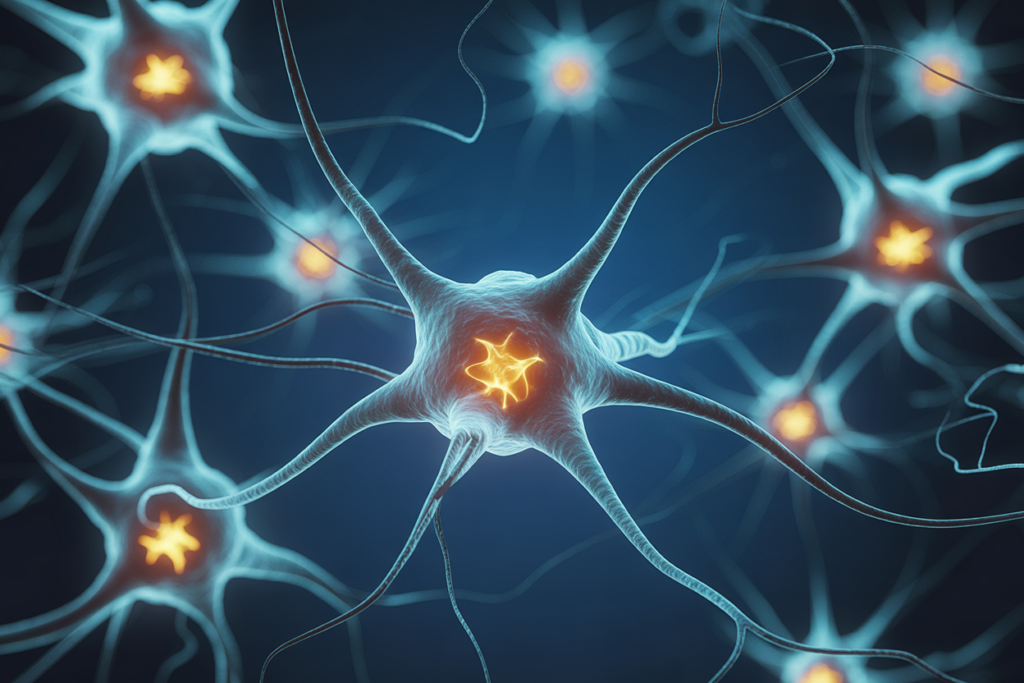
They discovered something fascinating: during adolescence, your brain goes through a massive reorganization. It’s not just growing—it’s pruning.
Think of it like sculpting. Early in life, your brain creates an enormous number of neural connections—far more than you’ll ever need. As you age, it begins trimming away the connections you don’t use, while strengthening the ones you do. This process makes your brain more efficient.
Researchers noticed that this pruning happened from back to front in the brain. The more primitive regions—the ones responsible for basic motor control—matured first. The more advanced regions, particularly the prefrontal cortex (responsible for decision-making, impulse control, and emotional regulation), were still changing through the teenage years.
The studies tracked participants up to about age 20. Since the data stopped there, researchers made an educated guess about when development “finished.”
The number that stuck? Twenty-five.
It wasn’t based on definitive proof. It was an estimate, an extrapolation. But it sounded scientific, it explained why teenagers make questionable decisions, and it gave twenty-somethings a convenient explanation for their own mistakes.
So it went viral.
The problem? Nobody told us it was just a rough estimate. And nobody updated us when new research proved it wrong.
What the 2025 Science Actually Shows
In late 2024 and early 2025, neuroscientists did something previous researchers couldn’t: they analyzed brain scans from over 4,200 people ranging from infancy to age 90.
Instead of looking at isolated brain regions, they studied something more sophisticated—how efficiently different parts of the brain communicate with each other.
What they found rewrites everything we thought we knew about brain development.
The research, published in Nature Communications, identified distinct stages of brain organization throughout the entire lifespan. But here’s the kicker:
The “adolescent” period of major brain reorganization doesn’t end at 25. It extends from age 9 to age 32.
Let that sink in for a moment.
If you’re 28 and think you’re “too old to change,” your brain is literally still in its developmental adolescence. If you’re 31 and believe your personality is fixed, science says your neural networks are still actively reorganizing.
The study found that during this extended period (what they called “brain adolescence”), your brain is balancing two critical processes:
Segregation: Building specialized neighborhoods of related neural functions
Integration: Building highways to connect those neighborhoods efficiently
This construction project doesn’t stabilize into an “adult” pattern until your early 30s.
And even then? It doesn’t stop. The brain continues adapting, reorganizing, and forming new pathways throughout life—just in different ways at different stages.
Why This Changes Everything About Patterns
Here’s why this matters far beyond correcting internet trivia:
Every limiting pattern you’ve accepted as “just who you are” was formed by a brain that was—and still is—fundamentally plastic.
That anxiety response that feels hardwired? Built through repetition in a brain that’s still developing.
That people-pleasing tendency you’ve had since childhood? Strengthened by neural pathways in a brain that hasn’t finished organizing.
That perfectionism that’s been with you for decades? Encoded in networks that are still capable of reorganization.
You are not stuck with who you were at 22, 25, or 28. Your brain has been—and continues to be—in active construction.
The ancient wisdom traditions understood this intuitively, even without brain scanners. The Sufis taught that transformation was possible at any age through muraqaba (self-observation) and mujahada (spiritual struggle). The Stoics believed that philosophy was a daily practice precisely because the mind could be reshaped through consistent discipline. The Buddhists spoke of bhavana—mental cultivation that doesn’t stop at any arbitrary age.
They knew what science is now confirming: your mind is not fixed at 25, 30, or any other age. It’s adaptive. It’s plastic. It’s waiting to be reshaped.
The Real Question Isn’t “Am I Too Old?” It’s “Am I Practicing?”
So if your brain is still developing and reorganizing into your 30s—and maintains neuroplasticity throughout your life—why do so many people feel stuck?
Because development isn’t the same as improvement.
Your brain will continue to develop whether you guide it or not. But here’s the critical distinction:
Unguided development reinforces whatever you’re already doing most.
Guided development allows you to deliberately build new patterns.
Think of it this way: if you practice catastrophizing every time something goes wrong, your brain becomes exceptionally good at catastrophizing. The neural pathways strengthen. The response becomes automatic. This is your brain “developing”—just in a direction you don’t want.
But if you practice observing that catastrophizing without immediately believing it, if you practice choosing a different response, if you do this repeatedly with focus and intention—your brain develops in a different direction. New pathways form. Old ones weaken.
This is what neuroscientists call self-directed neuroplasticity: using your awareness to deliberately reshape your brain’s patterns.
And here’s the empowering part: the fact that your brain is still in its developmental “adolescence” through your early 30s means it’s particularly receptive to this kind of intentional rewiring.
You’re not fighting against a fully-formed, rigid structure. You’re working with a brain that’s actively reorganizing itself.
The question isn’t whether change is possible. The question is: Are you giving your brain the repeated practice it needs to build new pathways?
The Three-Part Framework: Ancient Wisdom Meets Modern Neuroscience
The ancient contemplative traditions didn’t have fMRI machines, but they mapped the exact process that modern neuroscience has confirmed for rewiring patterns. They just used different language.
Here’s how their wisdom translates into the science of neuroplasticity:
Part 1: See the Pattern (Metacognition)
Marcus Aurelius, the Stoic emperor, wrote in his Meditations:
“The impediment to action advances action. What stands in the way becomes the way.”
He wasn’t being cryptic. He was teaching what neuroscientists now call metacognition—the ability to observe your own mental processes.
Before you can change a pattern, you have to see it clearly. Not judge it, not shame yourself for it—just notice it arising. Watch the trigger, observe the automatic response, recognize the pattern in real-time.
Recent studies on mindfulness and meditation show that this kind of self-observation actually disrupts automatic neural pathways. When you watch a pattern without immediately acting on it, you’re literally weakening its automaticity in your brain.
The Sufis had a practice called muraqaba—”the watcher.” You learn to observe your thoughts and emotions as they arise without identifying with them. You become the sky watching clouds pass, rather than the clouds themselves.
This isn’t passive. Observation is the first intervention.
When you’re 27, 30, 33—and your brain is still actively reorganizing—this metacognitive practice becomes even more powerful. You’re not just fighting against old patterns; you’re working with a brain that’s primed for reorganization.
Part 2: Create Space (Acceptance)
There’s a reason why Rumi’s poem “The Guest House” has endured for 800 years:
“This being human is a guest house. Every morning a new arrival… Welcome and entertain them all!”
He wasn’t promoting toxic positivity. He was teaching a neuroplastic principle that modern psychology calls acceptance and defusion.
Here’s what happens in your brain when you resist an unwanted thought or feeling: you actually strengthen it. When you think “I shouldn’t be anxious,” your brain now has two problems to solve—the anxiety itself, and your resistance to it.
But when you practice acceptance—“This is what’s here right now, and I don’t have to fight it or fix it”—you activate your parasympathetic nervous system. You signal to your brain that there’s no emergency. The pattern loses its charge.
Research from Acceptance and Commitment Therapy (ACT) confirms this: the more you try to control or eliminate uncomfortable thoughts and feelings, the more they persist. The more you accept their presence without acting on them, the less power they have.
Your developing brain (yes, even at 29, 31, 34) is learning from every interaction. When you practice acceptance instead of resistance, you’re teaching it a new response pattern. Over time, this becomes your default.
Part 3: Practice the Alternative (Repetition)
The Buddha didn’t tell his students to have one profound insight and expect enlightenment. He gave them daily practices—specific techniques to repeat until new patterns became second nature.
The Stoics didn’t read philosophy once. They practiced daily journaling, morning meditations, evening reflections—what philosopher Pierre Hadot called “spiritual exercises.”
They understood what neuroscientist Donald Hebb later formalized: neurons that fire together, wire together.
This is the piece most modern self-help gets catastrophically wrong. It gives you insight without practice. Awareness without repetition. A moment of clarity without a daily method to make it permanent.
But here’s what the 2025 research on brain development tells us:
If your brain is still in active reorganization through your early 30s, consistent practice during this period can literally reshape your neural architecture more efficiently than at any other time in adult life.
You’re not trying to break through concrete. You’re working with neural networks that are still establishing their final form.
The practice doesn’t have to be dramatic. Small, consistent interventions—repeated daily—are what create lasting change.
This is how your brain actually rewires: through strategic, repeated practice that gradually strengthens new pathways until they become stronger than the old ones.
What This Means for Your Specific Patterns
Let’s get practical. You’re reading this because there’s some pattern you want to change.
Maybe it’s:
- People-pleasing that makes you say yes when you mean no
- Perfectionism that keeps you from starting anything unless it’s guaranteed to be flawless
- Catastrophizing that turns minor setbacks into evidence of total failure
- Comparison that makes other people’s success feel like your failure
- Avoidance that has you scrolling your phone instead of addressing what matters
Here’s what the neuroscience of continued brain development means for you:
These patterns aren’t your identity. They’re neural pathways that got strengthened through repetition in a brain that’s still actively developing.
You’re not “broken.” You’re not “too old to change.” You’re not even “too set in your ways.”
You’re a person whose brain—yes, even at 28, 31, 35—is still reorganizing itself. And you now have a choice about what patterns you’re going to strengthen through your daily practice.
The ancient traditions knew this. Epictetus, the Stoic philosopher, said:
“It’s not what happens to you, but how you react to it that matters.”
He wasn’t dismissing your circumstances. He was pointing to the space where neuroplasticity happens: in the gap between trigger and response.
Every time you:
- Notice a pattern arising (metacognition)
- Accept its presence without acting on it automatically (defusion)
- Choose a different response (new pathway)
…you’re literally rewiring your brain.
Not metaphorically. Literally.
And the fact that your brain is still in its developmental “adolescence” means this rewiring happens more readily than you’ve been led to believe.
The Protocol: How to Actually Change a Pattern
If you want to apply this starting today, here’s what actually works:
Week 1: Identify & Observe
Choose ONE pattern you want to change. Just one. (Trying to change everything at once is how you change nothing.)
For seven days, practice nothing but observation:
- When does this pattern arise?
- What triggers it?
- What thoughts accompany it?
- What feelings show up?
- What do you typically do?
Don’t try to change it yet. Just watch it. Journal about it. Become intimately familiar with how it operates.
This is muraqaba—the watcher. You’re training your metacognitive muscle.
Week 2: Practice Acceptance
Now that you can see the pattern, practice accepting its presence without acting on it automatically.
When it arises, try this:
- Name it: “There’s the people-pleasing pattern.”
- Accept it: “It’s here right now, and that’s okay.”
- Create space: Take three deep breaths before responding
You’re not eliminating the pattern. You’re creating space between its arrival and your response to it. This space is where neuroplasticity happens.
Week 3: Build the Alternative
Now you’re ready to practice a new response.
Every time the pattern arises and you create that space of acceptance, practice ONE alternative response:
- If your pattern is people-pleasing: practice saying “Let me think about that and get back to you”
- If it’s catastrophizing: practice the Stoic reframe “What’s the most likely outcome?”
- If it’s perfectionism: practice “Done is better than perfect”
The specific alternative matters less than practicing it consistently.
Your brain learns through repetition. The new pathway strengthens each time you use it.
Week 4+: Integration & Adjustment
By week four, you should notice:
- Greater awareness when the pattern arises
- A little more space between trigger and response
- Occasional success in choosing the alternative
This isn’t perfection. This is progress. This is neuroplasticity in action.
Continue the practice. Adjust as needed. Some days you’ll fall back into the old pattern—this is normal. Your brain is learning. Old pathways don’t disappear immediately; they just weaken over time as new ones strengthen.
The key is consistency, not perfection.
The Real Timeline of Change
Here’s what you need to know about how long neuroplastic change actually takes:
14 days: You can begin to notice the old pattern arising more quickly
21 days: You start to experience moments of choice you didn’t have before
66 days: Research shows this is the average time for a new behavior to become automatic
90 days: Significant neural pathway reorganization becomes measurable
6 months: The new pattern begins to feel more natural than the old one
This isn’t “manifest in 21 days” nonsense. This is how your brain actually rewires.
And here’s the empowering part: if you’re under 32, you’re doing this work during your brain’s natural period of major reorganization. You’re not fighting against a finished structure—you’re working with a brain that’s actively remodeling itself.
If you’re over 32, neuroplasticity doesn’t stop—it just requires more consistent practice. But it’s still absolutely possible.
The contemplative traditions knew this. They didn’t promise instant transformation. They promised that daily practice, sustained over time, fundamentally changes who you are.
Why I Created “The Watcher’s Way”
For years, I studied ancient wisdom traditions—Stoicism, Sufism, Buddhism—trying to understand how people actually transformed their patterns.
What I discovered was that all three traditions taught the same process:
- Learn to observe your mind (metacognition)
- Accept what arises without resistance (defusion)
- Practice new responses repeatedly (neuroplasticity)
Then I studied modern neuroscience and realized: they were teaching brain rewiring protocols. They just didn’t have the language to explain why they worked.
The Watcher’s Way is my attempt to bridge these worlds—to take the contemplative wisdom that’s worked for centuries and combine it with what we now know about how the brain actually changes.
It’s a 7-day protocol designed specifically for people who:
- Feel stuck in patterns they can’t seem to break
- Are tired of self-help that’s all motivation and no method
- Want a real, evidence-based approach to change
- Are ready to practice, not just understand
The program walks you through:
- Day 1 – Awareness: Learning to see your patterns clearly
- Day 2 – Acceptance: Creating space through surrender
- Day 3 – Attention: Building presence and metacognition
- Day 4 – Alignment: Connecting to your actual values
- Day 5 – Action: Implementing small, strategic changes
- Day 6 – Adaptation: Adjusting your practice based on results
- Day 7 – Affirmation: Committing to ongoing practice
It’s not a quick fix. It’s not a weekend breakthrough. It’s a protocol for how your brain actually rewires—combining ancient practices with modern neuroscience.
Because now we know: your brain doesn’t stop developing at 25. It continues reorganizing throughout your 20s and into your 30s. And it maintains neuroplasticity your entire life.
The question isn’t whether you can change. The question is whether you’re willing to practice.
Starting Today
If there’s one thing I want you to take from this, it’s this:
You are not the finished version of yourself.
That pattern you’ve carried for years—the one that feels so deeply “you” that you can’t imagine being different—was built by a brain that was, and still is, actively developing.
The limiting belief that “I’m just this way” was formed by neural pathways that can be rewired.
The automatic reaction you’ve had for decades can be replaced with a chosen response.
Not through willpower or positive thinking, but through the systematic application of practices that actually work—practices the ancient traditions mapped out centuries ago, and modern neuroscience has now confirmed.
Your brain at 27, 30, 33 is still reorganizing. Still building new pathways. Still capable of profound change.
The only question is: What are you practicing?
Because your brain is learning from every repeated thought, every automatic reaction, every pattern you engage—whether you’re doing it consciously or not.
You can let your patterns continue to deepen through unconscious repetition.
Or you can start practicing something different.
The ancient mystics knew which choice led to freedom. Modern neuroscience has confirmed they were right.
Your brain is ready. The only question is: are you?
The Watcher’s Way is a 7-day transformational guide that combines Stoic, Sufi, and Buddhist practices with modern neuroscience to help you rewire the patterns keeping you stuck. If you’re ready to work with your brain’s natural plasticity—not against it—join us at thegreyhour.com.
Follow @owl.daze on Instagram for daily ancient wisdom practices.
References & Scientific Sources
2025 Brain Development Research:
- Mousley, A. et al. (2025). “Topological Turning Points Across the Human Lifespan.” Nature Communications.
- Research showing brain “adolescence” extends from age 9-32, challenging the “fully developed at 25” myth
Neuroplasticity & Adult Brain Change:
- Doidge, N. (2007). The Brain That Changes Itself: Stories of Personal Triumph from the Frontiers of Brain Science.
- Lally, P. et al. (2010). “How are habits formed: Modelling habit formation in the real world.” European Journal of Social Psychology. (66-day habit formation finding)
- Hebb, D.O. (1949). The Organization of Behavior. (“Neurons that fire together, wire together”)
Metacognition & Mindfulness:
- Brewer, J. et al. (2011). “Meditation experience is associated with differences in default mode network activity.” PNAS.
- Flavell, J.H. (1979). “Metacognition and cognitive monitoring: A new area of cognitive-developmental inquiry.” American Psychologist. https://jgregorymcverry.com/readings/flavell1979MetacognitionAndCogntiveMonitoring.pdf
Acceptance & Defusion:
- Hayes, S.C. et al. (2011). Acceptance and Commitment Therapy: The Process and Practice of Mindful Change.
- Research confirming that resistance strengthens unwanted thoughts while acceptance weakens them
Ancient Wisdom Traditions:
- Aurelius, M. Meditations. (Stoic practices of self-observation)
- Rumi, J. The Essential Rumi. (Sufi acceptance practices)
- Hadot, P. (1995). Philosophy as a Way of Life: Spiritual Exercises from Socrates to Foucault.
Brain development age 25
What pattern have you been carrying that you thought was permanent? Share in the comments—your brain is more plastic than you think.