
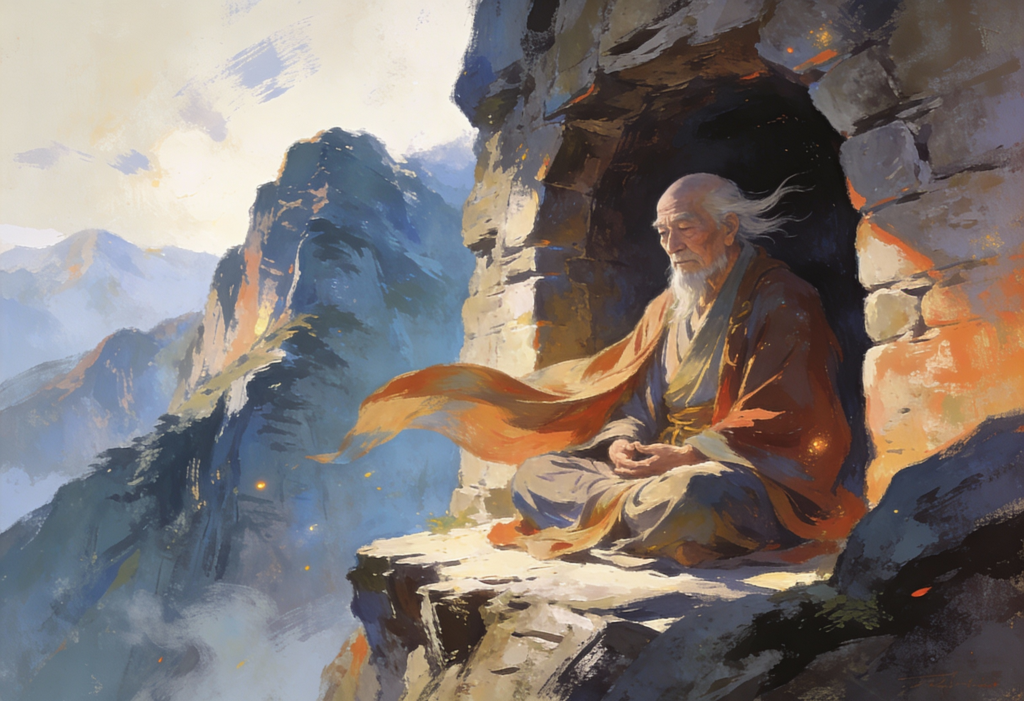
Stoic philosophy practice – Category: Stoic Philosophy | Reading Time: 19 minutes
Introduction: The Fortress That Cannot Fall—Ancient Wisdom Meets Neuroscience
Marcus Aurelius, philosopher-emperor of Rome, ruled an empire constantly under siege. Barbarians pressed against the borders. The Antonine Plague decimated entire cities, killing an estimated five million people. His co-emperor and adopted brother Lucius Verus died suddenly. His wife Faustina faced constant rumors of infidelity. Court intrigues threatened his authority. His own son Commodus showed signs of the cruelty that would later destroy the empire. Yet in his private journals—later published as Meditations—Marcus wrote not of despair, but of an unconquerable fortress: the Inner Citadel.
This wasn’t positive thinking or spiritual bypassing. It was something far more radical: a practical philosophy for maintaining sovereignty over your inner life regardless of external circumstances. Marcus discovered what neuroscience is only now confirming: the human brain possesses a remarkable capacity for what psychologists call ‘cognitive reappraisal’—the ability to consciously reframe how we interpret events, thereby changing our emotional and physiological responses.
Research by Dr. Kevin Ochsner at Columbia University demonstrates that cognitive reappraisal activates the prefrontal cortex while dampening amygdala activity—essentially, the thinking brain regulating the emotional brain. His fMRI studies show that those trained in reappraisal techniques show lasting changes in neural circuitry, developing what neuroscientists call ’emotional resilience.’ The Stoics, without brain imaging technology, systematically developed these exact neural pathways through philosophical practice.
What makes Stoicism particularly relevant today is how precisely it addresses the modern nervous system crisis. Dr. Stephen Porges’ Polyvagal Theory explains that chronic stress keeps us locked in sympathetic nervous system activation—the ‘fight or flight’ state. Contemporary research by Dr. Bruce McEwen at Rockefeller University shows that sustained stress exposure literally remodels the brain, shrinking the hippocampus (memory/learning) while enlarging the amygdala (fear processing). We’re walking around with brains shaped by perpetual threat perception.
The Stoic practices—particularly the dichotomy of control, cognitive distancing, and voluntary discomfort—function as neurological interventions. They don’t just change your mindset; they rewire your brain’s threat-detection systems. Dr. Judson Brewer’s research at Brown University on mindfulness and addiction shows that practices emphasizing awareness and cognitive flexibility literally shrink the posterior cingulate cortex—a region associated with self-referential processing and getting ‘stuck’ in habitual patterns.
As Marcus himself wrote in his Meditations:
“You have power over your mind—not outside events. Realize this, and you will find strength.”
This single sentence contains the entire Stoic project: developing what psychologist Albert Bandura later termed ‘self-efficacy’—the belief in one’s capacity to influence internal states despite external conditions. Contemporary research on self-efficacy shows it’s one of the strongest predictors of resilience, mental health, and life satisfaction. The Stoics didn’t just philosophize about this; they created a systematic training program for developing it.
Today, you may not face barbarian invasions, but you face something just as relentless: the siege of modern existence. Information overload. Financial precarity. Relationship turbulence. Health anxieties. Political chaos. The climate crisis. The question Marcus faced is your question too: How do you remain unshaken when everything external is shaking? The answer lies not in controlling circumstances, but in mastering your relationship to circumstances. This is the Inner Citadel—and neuroscience now shows us exactly how it works.
The Architecture of Inner Freedom: The Dichotomy of Control
The Stoics discovered something neuroscience is only now confirming: most of your suffering comes not from events themselves, but from your judgments about events. As Epictetus, born enslaved yet becoming one of history’s greatest philosophers, taught in his Enchiridion:
“People are disturbed not by things, but by the views which they take of them.”
This isn’t metaphysical speculation—it’s neuroscience. Dr. Lisa Feldman Barrett’s research on the ‘theory of constructed emotion’ at Northeastern University demonstrates that emotions aren’t hardwired reactions to stimuli. Instead, the brain constructs emotional experiences by integrating sensory input with predictions based on past experience, cultural learning, and conceptual knowledge. You literally create your emotional reality through interpretation.
Consider this everyday example: Your boss sends a curt email saying ‘See me today.’ The email itself is neutral data—pixels on a screen. But your brain instantly constructs a story: ‘They’re angry at me. I’m failing. I might get fired. I’m not good enough.’ Within seconds, you’ve moved from a neutral event to full-blown anxiety, complete with elevated cortisol, increased heart rate, and narrowed attention. The email didn’t cause this—your interpretation did.
The Inner Citadel is built on recognizing this gap—the space between what happens and what you make it mean. This space is where your freedom lives. Psychologist Viktor Frankl, who survived Auschwitz by applying Stoic principles, wrote:
“Between stimulus and response there is a space. In that space is our power to choose our response. In our response lies our growth and our freedom.”
Epictetus systematized this recognition into what he called the cornerstone principle of Stoicism—the Dichotomy of Control:
“Some things are within our power, while others are not. Within our power are opinion, motivation, desire, aversion, and, in a word, whatever is of our own doing; not within our power are our body, our property, reputation, office, and, in a word, whatever is not of our own doing.”
Within your control:
• Your judgments and interpretations of events
• Your values and principles—what you stand for
• Your effort and where you direct attention
• Your response to circumstances—how you act
• The stories you tell yourself about reality
Outside your control:
• Other people’s opinions, feelings, and actions
• Past events and future outcomes
• Your body’s aging, illness, and eventual death
• Economic conditions, politics, and social trends
• Natural disasters, accidents, and unexpected events
Here’s the revolutionary insight: You waste immeasurable energy trying to control what you cannot, while neglecting what you actually can control—your perceptions, values, and responses. This misallocation of attention creates what psychologists call ‘learned helplessness’—the condition Martin Seligman’s research identified as a core component of depression.
When you try to control the uncontrollable, you inevitably fail. Repeated failure creates the belief that you’re powerless. But you’re not powerless—you’re just directing power toward the wrong domain. Shift attention to what’s actually within your control, and agency returns.
Practice: The Daily Audit
Each evening, review your day by asking: What did I spend energy trying to control that was never mine to control? What did I neglect that was fully within my power?
Write these down. You’ll notice patterns. The same anxieties about others’ opinions. The same attempts to control outcomes. The same neglect of your actual sphere of influence—your character, effort, and response.
The First Wall: Prosoche (Attention) and the Neuroscience of Presence
The Stoics practiced prosoche—vigilant attention to the present moment and your internal state. Pierre Hadot, the French philosopher who revived interest in ancient philosophy as a way of life, identified prosoche as the fundamental Stoic practice:
“Prosoche is the continuous attention to oneself, vigilance, and presence of mind—the fundamental Stoic spiritual attitude.”
This isn’t meditation as escape or relaxation—it’s radical presence to what is. Most people sleepwalk through life, reacting automatically to stimuli. A notification arrives—you react. Someone criticizes—you react. Desire arises—you react. You’re not living; you’re being lived by unconscious patterns.
Neuroscientist Dr. Amishi Jha’s research at University of Miami demonstrates what happens when attention goes untrained. Her studies of military personnel show that high-stress environments cause ‘attentional degradation’—the mind becomes increasingly captured by threat-related stimuli, narrowing focus and reducing cognitive flexibility. Without prosoche, you become a prisoner of your amygdala’s threat-detection system.
But Jha’s research also shows the solution: attention training creates ‘attentional resilience.’ Even brief daily practice (12 minutes) significantly improves working memory, reduces mind-wandering, and enhances emotion regulation under stress. The Stoics developed this capacity through continuous self-monitoring—what they called ‘keeping guard at the citadel door.’
Prosoche interrupts the automation. It creates a pause between stimulus and response—the space where freedom exists. As Seneca wrote in his Letters from a Stoic:
“True happiness is to enjoy the present, without anxious dependence upon the future, not to amuse ourselves with either hopes or fears but to rest satisfied with what we have, which is sufficient.”
Modern application:
Before checking your phone in the morning, take three conscious breaths. Notice the impulse to reach for the device. Feel the craving—the slight anxiety, the compulsion. Then choose—don’t just react. This single practice, applied consistently, rewires the neural pathway from stimulus to automatic response.
When someone triggers you, pause for three seconds before responding. In that pause, activate what psychologist Tara Brach calls the ‘RAIN’ practice: Recognize what’s happening, Allow it to be there, Investigate with kindness, and Natural awareness. Ask: ‘Is my reaction serving my highest values, or am I being puppeted by automatic patterns?’
The practice isn’t to never react—it’s to insert consciousness between trigger and response. That sliver of awareness is the beginning of sovereignty. Neuroscientist Dr. Richard Davidson’s research at University of Wisconsin shows that this capacity for ‘response flexibility’ is perhaps the best predictor of psychological wellbeing.
The Second Wall: Amor Fati (Love of Fate) and Radical Acceptance
Amor fati—love of fate—is perhaps the most misunderstood Stoic practice. It doesn’t mean passive resignation or apathy. It’s something far more powerful: the practice of wanting what happens to happen. Nietzsche, who channeled Stoic wisdom through his philosophy, gave this concept its name:
“My formula for greatness in a human being is amor fati: that one wants nothing to be different, not forward, not backward, not in all eternity. Not merely bear what is necessary, still less conceal it… but love it.”
This seems absurd at first. Love the diagnosis? Love the betrayal? Love the failure? But consider what modern psychology now confirms: What if your resistance to what is creates more suffering than the thing itself?
Dr. Steven Hayes, founder of Acceptance and Commitment Therapy (ACT), has conducted extensive research showing that ‘experiential avoidance’—the attempt to avoid or control unwanted internal experiences—is a core process underlying most psychological disorders. His meta-analyses demonstrate that struggling against painful thoughts and feelings intensifies them, creating secondary suffering far worse than the original pain.
The Stoics understood this millennia before ACT research. Marcus Aurelius wrote:
“A cucumber is bitter. Throw it away. There are briars in the road. Turn aside from them. This is enough. Do not add, ‘And why were such things made in the world?'”
The addition—the ‘why’ question, the resistance, the demand that reality be different—this is what creates suffering beyond pain. The event is neutral. Your war against reality is what destroys you.
Neuroscientist Dr. Kristin Neff’s research on self-compassion demonstrates that acceptance-based approaches activate the parasympathetic nervous system (rest-and-digest), reduce cortisol, and increase oxytocin. Resistance activates the sympathetic nervous system (fight-or-flight), elevates stress hormones, and keeps you in a state of physiological threat. Your body literally cannot heal while fighting reality.
The practice of amor fati:
When something unwanted happens, instead of immediately fighting it, ask: ‘How is this exact circumstance the perfect teacher for who I’m becoming?’
Your project fails. Instead of spiraling into victimhood, ask: ‘What is this failure revealing about my assumptions? What skill am I being invited to develop? What attachment is being loosened?’
You get sick. Instead of railing against your body, ask: ‘What is this illness teaching me about rest, vulnerability, acceptance, mortality?’
This isn’t toxic positivity pretending pain isn’t real. It’s mature acceptance that resistance to what is only compounds suffering. It’s the recognition that reality doesn’t require your approval to be what it is. As Epictetus taught:
“Do not seek to have events happen as you want them to, but instead want them to happen as they do happen, and your life will go well.”
The Third Wall: Memento Mori (Remember Death) and Temporal Perspective
Every Stoic kept death close—not as morbid obsession, but as clarity practice. Seneca wrote letters from the perspective of his last day. Marcus reminded himself each morning:
“You could leave life right now. Let that determine what you do and say and think.”
Modern culture tries to hide death, sanitize it, pretend it away through anti-aging industries and euphemisms. But this avoidance doesn’t protect us—it robs us of the clarity that comes from acknowledging our mortality. Psychologist Sheldon Solomon’s Terror Management Theory research shows that unconscious death anxiety drives much of our behavior—consumerism, status-seeking, tribalism, and the desperate pursuit of symbolic immortality.
However, Solomon’s research also reveals something fascinating: conscious death awareness, when coupled with meaning and values, doesn’t increase anxiety—it decreases it. Those who consciously reflect on mortality tend to be more prosocial, less materialistic, and more focused on intrinsic values. The Stoics discovered this paradox experientially: memento mori doesn’t create nihilism; it creates preciousness.
When you deeply internalize your mortality, the petty anxieties lose their grip. That argument with your partner? Meaningless when you remember you’re both dying. That career setback? Trivial when you acknowledge this is your one finite life. Social media drama? Absurd when measured against the brevity of existence.
Death awareness doesn’t create nihilism—it creates discernment. Each conversation becomes sacred when you know it could be the last. Each sunrise becomes a gift when you remember how many you’ve wasted. As Seneca wrote in On the Shortness of Life:
“It is not that we have a short time to live, but that we waste a lot of it. Life is long enough, and a sufficiently generous amount has been given to us for the highest achievements if it were all well invested.”
Contemporary research on ‘temporal perspective’ by psychologist Philip Zimbardo demonstrates that how we relate to time—past, present, and future—significantly impacts wellbeing. Those with balanced time perspective show greater life satisfaction, less anxiety, and better decision-making. Memento mori creates this balance, anchoring you in the present while maintaining awareness of time’s passage.
The practice:
Each night, as you lie down, imagine this is your last day. Really feel it. What mattered? What didn’t? What would you do differently tomorrow if you knew you had limited time?
Then wake and live from that clarity. Not frantically cramming experiences, but discerningly choosing what actually matters. This practice, maintained consistently, transforms your relationship with time from anxiety about scarcity to appreciation for gift.
The Fourth Wall: Premeditatio Malorum (Negative Visualization)
This is perhaps the most misunderstood Stoic practice. It’s not pessimism or catastrophizing—it’s inoculation against future suffering. The practice: regularly imagine losing what you value most. Your health. Your loved ones. Your home. Your career. Not to torture yourself, but to remember: Everything you have is on loan. Nothing is permanent. All is borrowed.
Contemporary psychologist Daniel Gilbert’s research on ‘affective forecasting’ shows that humans are terrible at predicting how events will make them feel. We overestimate the impact of both positive and negative events—what he calls the ‘impact bias.’ We think winning the lottery will make us permanently happy or losing a job will destroy us. Neither is true. Emotions return to baseline faster than we predict.
The Stoics used negative visualization to correct this bias. By imagining loss beforehand, you accomplish two things. First, you stop taking anything for granted. That morning coffee with your partner? Precious. Your child’s laugh? Sacred. Your functioning body? A temporary gift. Epictetus taught:
“When you kiss your child goodnight, whisper to yourself: ‘Tomorrow you may be dead.’ This is not morbid—it is acknowledging the truth so that you might truly see them now.”
Second, when loss inevitably comes, you’re not blindsided. You’ve already metabolized the possibility. You’ve prepared your nervous system. Dr. Sonja Lyubomirsky’s research on ‘hedonic adaptation’ shows that we adapt to both positive and negative events faster when we’ve mentally prepared for them. The blow still lands, but it doesn’t destroy you.
Neurologically, this practice is a form of ‘stress inoculation’—a technique validated by psychologist Donald Meichenbaum’s research. By exposing yourself to mild stressors (imagined loss) in a controlled way, you build psychological antibodies. Your prefrontal cortex learns to regulate amygdala responses to loss, creating actual changes in neural circuitry.
The practice:
Once a week, spend five minutes imagining life without something you depend on. Not dwelling in anxiety, but calmly acknowledging: ‘This thing I love is impermanent. How would I respond if I lost it? What would remain?’
You’ll discover something powerful: Beneath everything that can be lost, there’s something that cannot be taken—your capacity for virtue, your ability to choose your response, your essential nature. As Viktor Frankl discovered in Auschwitz:
“Everything can be taken from a man but one thing: the last of the human freedoms—to choose one’s attitude in any given set of circumstances, to choose one’s own way.”
The Keep: Virtue as the Sole Good
At the center of the Inner Citadel sits the keep—the innermost chamber that cannot be breached. For the Stoics, this was virtue: wisdom (sophia), justice (dikaiosyne), courage (andreia), and moderation (sophrosyne). These weren’t abstract ideals—they were the only things the Stoics considered genuinely ‘good.’
Everything else—health, wealth, reputation, success—they classified as ‘preferred indifferents.’ You can prefer them without needing them for wellbeing. They’re nice to have but not essential for eudaimonia (human flourishing). Only virtue is essential.
This sounds abstract until you test it experientially. You can lose your money and still be at peace if you maintain integrity. You can lose social status and remain centered if you’re living by your values. You can face illness with equanimity if you’re responding with courage. But compromise your values—lie, betray, act from cowardice—and no amount of external success will restore your peace.
Contemporary positive psychology, particularly the work of Dr. Martin Seligman on authentic happiness and Dr. Christopher Peterson’s research on character strengths, validates this ancient wisdom. Their studies show that living according to core values (what they call ‘signature strengths’) predicts wellbeing far more than circumstances. Peterson and Seligman identified 24 character strengths across six virtues—remarkably similar to Stoic categories.
Marcus Aurelius understood this from lived experience:
“Waste no more time arguing what a good man should be. Be one.”
Neuroscientist Dr. Jordan Grafman’s research on moral cognition shows that acting in accordance with values activates reward centers in the brain—particularly the ventromedial prefrontal cortex. Integrity isn’t just philosophically important; it’s neurologically rewarding. Your brain literally feels good when you act virtuously, creating a positive feedback loop.
Conversely, moral injury—acting against your values—creates lasting psychological damage. Dr. Jonathan Shay’s work with combat veterans shows that moral injury (witnessing or perpetrating acts that violate core values) causes more severe PTSD than life-threatening events. Compromising virtue damages you at a fundamental level.
The practice:
Define your core values clearly. Write them down. Not aspirational values, but lived values—what you actually care about, evidenced by where you spend time and energy. Then audit your life: Where are you compromising them for comfort, approval, or convenience? What would it look like to realign?
Each evening, review your day through the lens of virtue. Where did you act with wisdom? Where did courage falter? Where did you serve justice? Where did moderation slip? This practice, what the Stoics called the ‘evening meditation,’ builds what psychologists call ‘moral muscle memory.’
Building Your Citadel: A 30-Day Stoic Protocol
Week 1: Foundation (Dichotomy of Control)
Morning ritual (5 minutes): List three things outside your control you’re worrying about. Consciously release them. Say aloud: ‘This is not mine to control.’
Evening ritual (5 minutes): List three things within your control you can improve tomorrow. Be specific about actions, not outcomes.
Throughout day: When anxiety arises, immediately ask: ‘Is this within my control?’ If no, practice releasing. If yes, take action.
Week 2: First Wall (Prosoche/Attention)
Set hourly alarms. When they ring, stop everything. Take three breaths. Ask: ‘Am I present or reactive right now? Am I acting from principle or impulse?’
Practice the three-second pause before all significant responses—emails, conversations, decisions. In that gap, activate choice.
Continue Week 1 practices.
Week 3: Second Wall (Amor Fati)
When something unwanted happens, write: ‘This is exactly what needed to happen because…’ and find three genuine reasons.
Practice saying ‘Yes’ to reality before trying to change it. ‘Yes, this happened. Now, what’s my wise response?’
Continue previous practices.
Week 4: The Keep (Virtue Integration)
Each evening, score yourself (1-10) on the four virtues: wisdom, justice, courage, and moderation. Where did you embody these? Where did you compromise?
Make one decision daily based solely on principle, not preference. Choose the virtuous path even when it’s harder.
Practice negative visualization (5 minutes weekly): Imagine losing something precious. Feel the impermanence. Return to gratitude.
Continue all previous practices.
The Truth About the Inner Citadel
Here’s what the Stoics understood that our culture has forgotten: External peace is impossible. The world is chaos. People will disappoint you. Your body will fail. Plans will crumble. Loss is guaranteed. As Marcus wrote:
“When you wake up in the morning, tell yourself: the people I deal with today will be meddling, ungrateful, arrogant, dishonest, jealous and surly. But I have seen the beauty and goodness of which they are capable.”
But internal peace? That’s always available. Not by controlling circumstances, but by mastering your relationship to circumstances. Not by getting what you want, but by wanting what you get. Not by avoiding death, but by remembering it. Not by achieving perfection, but by choosing virtue.
The Inner Citadel isn’t something you build once and inhabit forever. It’s a daily practice, a moment-by-moment choice to return to what’s within your control, to meet reality as it is, to act from principle rather than impulse.
Contemporary research on psychological resilience, compiled by psychologist Dr. George Bonanno at Columbia University, shows that resilient individuals share key characteristics: cognitive flexibility (prosoche), realistic acceptance (amor fati), strong value systems (virtue), and the ability to reframe adversity (dichotomy of control). These aren’t personality traits—they’re skills that can be developed. The Stoics created the training manual.
Marcus Aurelius, surrounded by siege and plague and betrayal, found peace not by changing his circumstances but by changing his relationship to them. In his final years, dying of illness on the battlefield, he wrote:
“You have power over your mind—not outside events. Realize this, and you will find strength.”
That same power is yours. The citadel is already built. You just need to remember where the door is—and that you alone hold the key.
━━━━━━━━━━━━━━━━
References and Further Reading
Academic Sources:
• Ochsner, K. N., et al. (2012). Functional imaging studies of emotion regulation: A synthetic review and evolving model of the cognitive control of emotion. Annals of the New York Academy of Sciences, 1251(1), E1-E24.
• Barrett, L. F. (2017). How Emotions Are Made: The Secret Life of the Brain. Houghton Mifflin Harcourt.
• Hayes, S. C., et al. (2006). Acceptance and commitment therapy: Model, processes and outcomes. Behaviour Research and Therapy, 44(1), 1-25.
• Jha, A. P., Morrison, A. B., Dainer-Best, J., et al. (2015). Minds ‘at attention’: Mindfulness training curbs attentional lapses in military cohorts. PloS One, 10(2), e0116889.
• Davidson, R. J., & McEwen, B. S. (2012). Social influences on neuroplasticity: Stress and interventions to promote well-being. Nature Neuroscience, 15(5), 689-695.
• Seligman, M. E. P., & Csikszentmihalyi, M. (2000). Positive psychology: An introduction. American Psychologist, 55(1), 5-14.
• Peterson, C., & Seligman, M. E. P. (2004). Character Strengths and Virtues: A Handbook and Classification. Oxford University Press.
• Bonanno, G. A. (2004). Loss, trauma, and human resilience: Have we underestimated the human capacity to thrive after extremely aversive events? American Psychologist, 59(1), 20-28.
Classical Stoic Texts:
• Marcus Aurelius. (170s CE). Meditations (Gregory Hays translation recommended)
• Epictetus. (100s CE). The Enchiridion (Handbook)
• Seneca. (60s CE). Letters from a Stoic (Moral Letters to Lucilius)
• Seneca. On the Shortness of Life
Contemporary Interpretations:
• Hadot, Pierre. (1995). Philosophy as a Way of Life: Spiritual Exercises from Socrates to Foucault. Blackwell.
• Irvine, William B. (2008). A Guide to the Good Life: The Ancient Art of Stoic Joy. Oxford University Press.
• Holiday, Ryan. (2014). The Obstacle Is the Way: The Timeless Art of Turning Trials into Triumph. Portfolio.
Recommended External Resources:
• The Daily Stoic – Modern application of Stoic wisdom: https://dailystoic.com/
• Internet Encyclopedia of Philosophy – Comprehensive academic overview of Stoicism: https://iep.utm.edu/stoicism/
Next Reading:
The Seven Stations of the Heart: A Sufi Map to Inner Liberation
https://thegreyhour.com/sufi-heart-stations/
Keywords: Stoic philosophy practice, , Inner citadel Marcus Aurelius, Dichotomy of control Epictetus, Stoicism for modern life, Amor fati practice, Memento mori meaning, Stoic emotional resilience, Prosoche attention practice, Cognitive reappraisal techniques, Ancient philosophy anxiety relief, Virtue ethics daily practice

I’ve felt like such a weirdo for years, doing stuff like thinking about death and running through worst-case scenarios in my head, which really helped me remain calm and grateful. But you can’t really talk about that stuff with people without getting weird looks, so I mostly kept it to myself wondering if there was something wrong with me.
This article was such a relief, it felt like someone finally got it. It gave actual names to my “weird” habits, Memento Mori and Premeditatio Malorum, and showed me they weren’t some creepy quirks, but part of some ancient, smart philosophy. I finally realized I wasn’t broken, just doing something deep without even knowing it.
What really got me was the brain science part. Saying these practices actually rewire your brain, moving from getting emotional to being in control, made it feel realistic and practical for nowadays. The Inner Citadel idea was like a map that totally matched what I already felt inside. This article didn’t just tell me stuff, it gave me words and a way to understand what I was already trying to do. It was basically permission to keep going, telling me that building up that mental fortress isn’t about being messed up, it’s actually something normal and important you should be doing.
Keep doing what you are doing Nizar, love your work.
Thank you Mohammad, for sharing this so honestly—it means more than you know. What you’ve been doing for years isn’t weird or broken, it’s ancient wisdom your soul intuited before your mind had language for it. The fact that you were practicing Memento Mori and Premeditatio Malorum without names for them, staying calm and grateful through contemplating mortality and worst-case scenarios, shows you’ve been building your Inner Citadel all along. You weren’t alone in this—the Stoics, the mystics, the wisest humans across centuries have all known what you discovered: that facing what we fear most paradoxically frees us from its grip. I’m deeply moved that the neuroscience piece helped it feel practical and real for you, that you finally have permission to trust what you’ve always known. You don’t need fixing—you need recognition. Keep building that fortress. Your instincts have been right all along.
Really appretiate the profound and honest review my dear friend.
Dear Nizar, I really want to thank you for writing this in such a grounded, human way. It put words to something I’ve been feeling for a long time. My mind used to feel like it was under quiet siege, even on days that looked peaceful from the outside. That’s one of the reasons I started meditating, practicing yoga, and taking long walks, just to come back into my body and soul, and out of the constant noise in my head and the world around me.
In those small moments of stillness or movement, I can feel myself, that tiny space open between what happens and how I react, and it changes everything. When you wrote about the inner citadel, about keeping guard at the door of the mind and learning to pause before responding, it felt exactly like that practice in language. Your example of the short ‘see me today’ email turning into a whole storm of fear and stories made me smile in recognition, I’ve lived that moment so many times, and honestly, still do sometimes.
Your reflections on attention, on loving fate instead of fighting reality, and on choosing what is actually within our control made something in me soften. It made sense of what I experience when I stop, breathe, and decide not to follow every anxious story my mind offers me. Your writing reminded me that this work is quiet and imperfect, but deeply real.
Thank you for naming it so clearly and so gently. It made me feel understood, and it encouraged me to keep practicing, one breath, one step, one small choice at a time.